
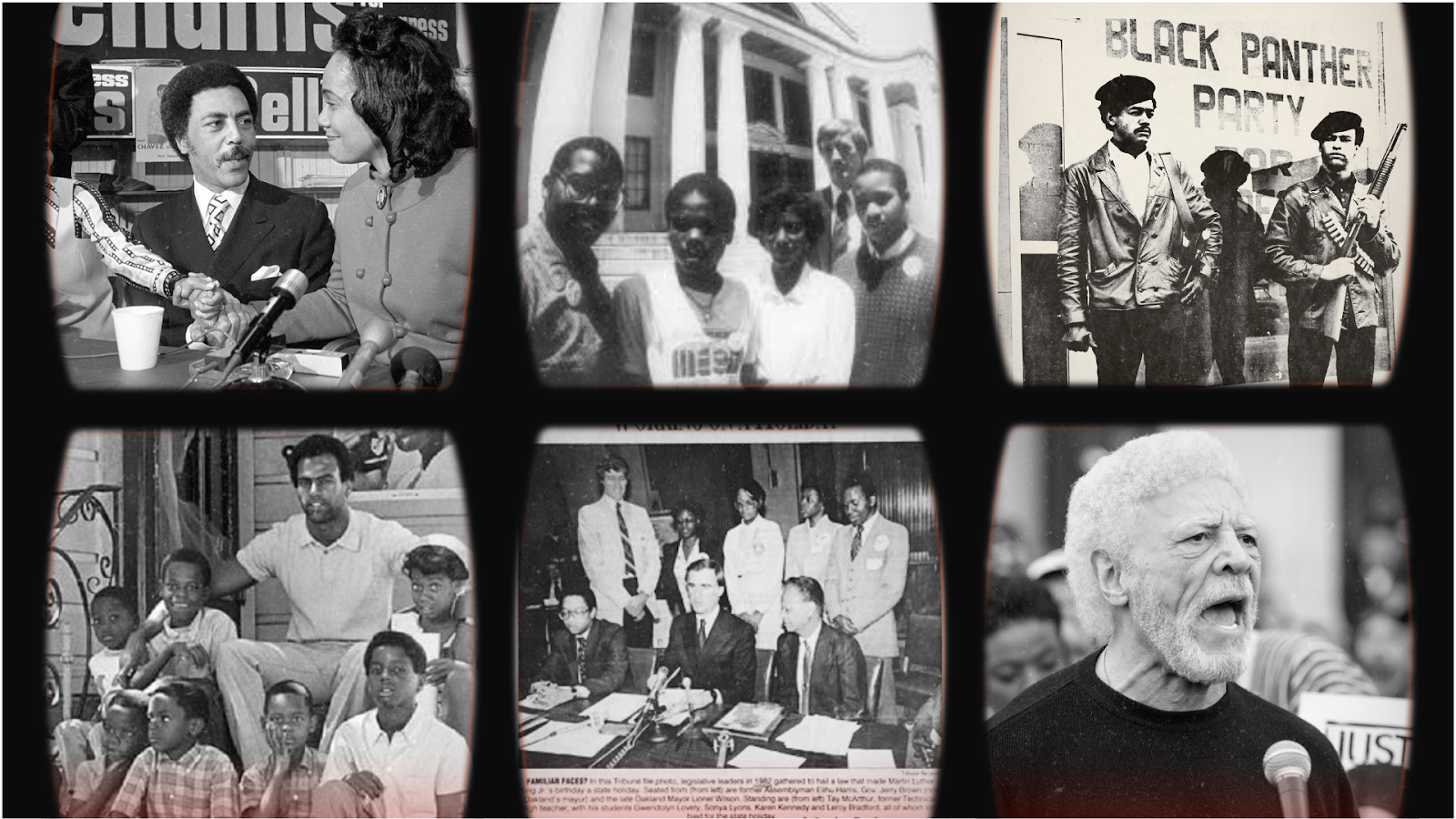
When most people think of Oakland Tech, they probably think of sports, the White House-esque building, and the large student body—not the civil rights movement. But behind the sound of student chatter, Oakland Tech’s hallways have echoed stories of political change and Black activism for generations. Through figures like Huey P. Newton, Ron Dellums, and The Apollos, the influence of Tech alumni has reached far beyond campus into the city of Oakland and the nation.
By the mid-20th century, Oakland was undergoing major social and demographic change. During and after World War II, the city’s Black population grew as African Americans moved west during the Second Great Migration. At the same time, Black communities faced segregation, unequal education, and housing discrimination, creating an environment where political awareness and activism became a part of everyday life.
Huey P. Newton’s connection to Oakland Tech was not one of pride or nostalgia. His family migrated from the South settling in Oakland. Newton struggled with school and felt alienated by the education system, which he later criticized for reinforcing inequality. Although his experience at Oakland Tech was difficult, his time as a student still contributed to the political awareness that shaped his future.
After leaving Oakland Tech as a member of Class of 1959, Newton co-founded the Black Panther Party for Self-Defense in 1966 alongside fellow activist Bobby Seale in West Oakland. The Party developed community programs —often led by women—such as the Free Breakfast for Children Program, community health clinics, and educational campaigns that addressed the immediate needs of Black families. As chapters spread nationwide, these programs followed. About nine community schools were opened, including the Oakland Community School led by party members Ericka Huggins and Donna Howell. By combining self-defense with community programs, the Panthers reshaped civil rights activism.
Unlike Newton, Ron Dellums worked to create change within the government. A graduate of Oakland Tech’s Class of 1953, Dellums became involved in local activism before going on to serve nearly 30 years in the U.S. House of Representatives. He co-founded the Congressional Black Caucus and advocated for social welfare programs, housing justice, and equitable education. Dellums also played a key role in the global anti-apartheid movement by sponsoring legislation that pressured the South African government to dismantle its systems of racial segregation. Dellums later returned to Oakland to serve as mayor from 2007 to 2011.
While alumni were changing the world outside of campus, Oakland Tech students were building a movement within it. In the late 1970s, a group known as The Apollos formed with their mission being to honor the legacy of Dr. Martin Luther King Jr. after a conversation with their U.S History teacher, Tay McArthur, about the lack of holidays honoring Black Americans. Though the group shrank to a small core—Gwendolyn Lovely, Karen Kennedy, Leroy Bradford, and Sonya Lyons—their impacts grew. They organized rallies, wrote letters to lawmakers, and met with elected officials to advocate for MLK day becoming an official state holiday. Their efforts were successful: in 1981, MLK day became a California state holiday, eventually contributing to the national holiday in 1983.
Together, these histories show that civil rights change does not follow a single path. From radical activism, to government influence, to student organizing, Oakland Tech’s students and alumni have helped shape the meaning of Black history and the fight for justice. Their stories not only serve as a reminder of the past but of the present as well: how we are history, and have the power to create it.