
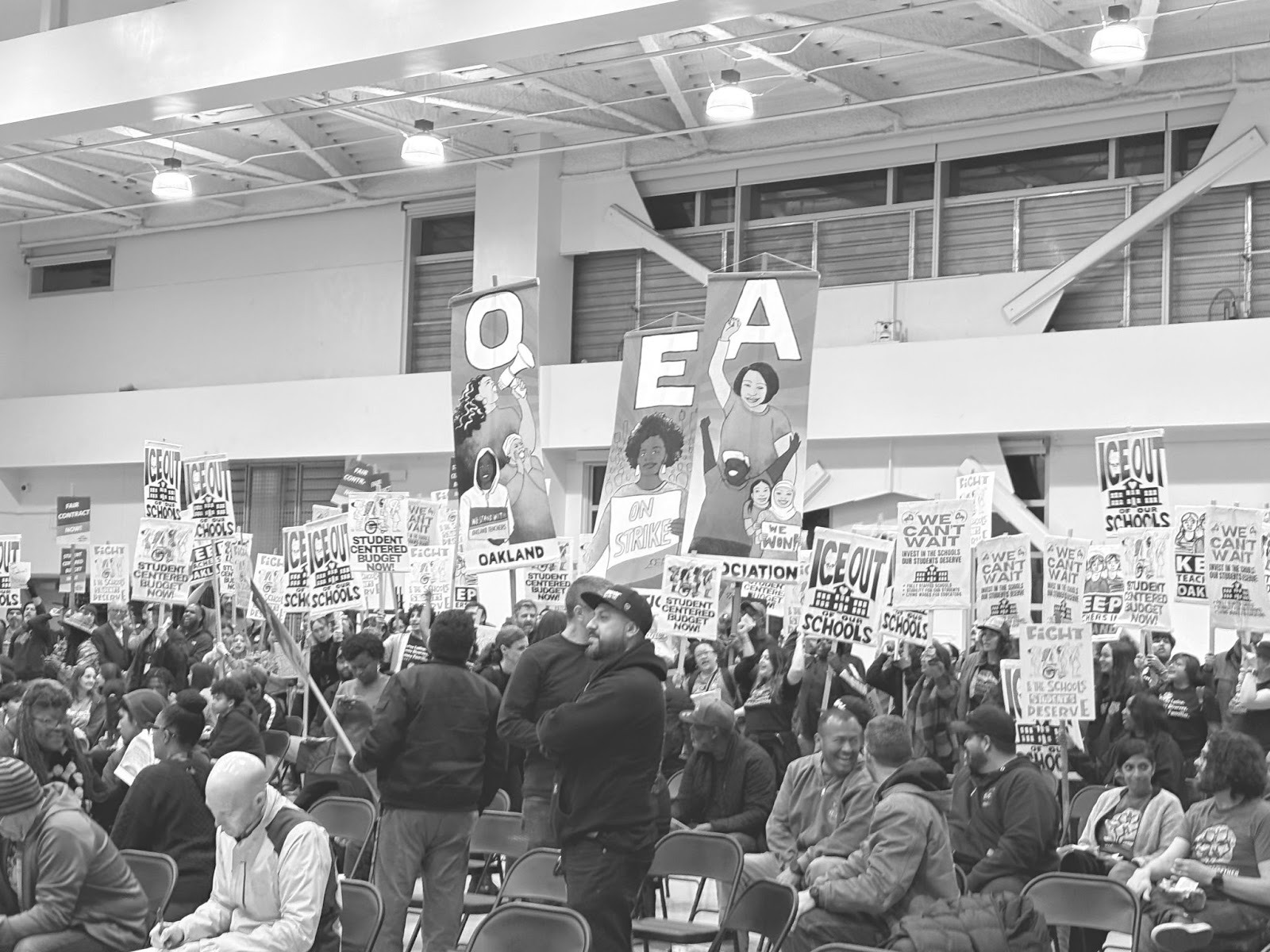
The Oakland Education Association (OEA) released the results from a preliminary strike assessment vote on January 29, amidst budget negotiations between the union and the Oakland Unified School District (OUSD). Nearly 90% of OEA members who voted expressed willingness to strike, if negotiations continue to stall.
“[OUSD is] being like, we’re not gonna give you any of the things you’re asking for at all, and instead, we’re gonna take away some things. Like, we’re gonna make class sizes bigger and take away newcomer programs,” described Oakland Tech math teacher and union member Alyse Schneider.
Other school districts around the Bay Area are facing potential teachers’ strikes and budget crises as well. The United Educators of San Francisco voted to authorize a strike on January 31, and the West Contra Costa Unified school district’s teachers went on a four-day strike in December. The same issues are sprinkled all across California; districts are combating deficit, enrollment challenges and inequity. California’s tax policies on corporations mean that the state spends far less per student than many other states, despite having the largest economy in the country.
Both OUSD and the OEA claim to prioritize a “student-centered budget,” with minimal losses in services for students and disruptions to school programs. OUSD aims to avoid school closures this year, which disproportionately impact lower-income students and encourage families to leave the district. Nevertheless, the OEA claims spending and salaries in the Central Administration are unjust, despite OUSD’s supposed loyalty to keeping budget cuts as far from schools as possible.
“This is strategic leadership during fiscal restraint: making the hard choices while protecting what matters most for students’ success,” read interim Superintendent Denise Saddler from the paper in her hand during a school board meeting on January 28.
These are merely pretty words to many union members, considering that Central Administration higher-ups enjoy salaries that rival that of the Oakland mayor, according to Transparent California.
“And we talk so much about making things more equitable for kids, while we’re reproducing an extremely inequitable Oakland, when we pay people huge amounts of money to not do the work,” explained Schneider.
The district has yet to offer its teachers a raise or even a cost-of-living adjustment, and fierce determination emanated from the union supporters at the rally before the January 28 school board meeting. Passionate speeches echoed off of Metwest High behind the speakers, and homemade signs bobbed up and down through the crowd.
“When we fight, we win,” they cheered, marching into the meeting. “Oakland is a union town!”
Union members have grown accustomed to “fighting” OUSD over budget and contract issues; last year, a teachers’ strike was narrowly called off a few days before, and a strike in 2019 lasted seven days.
The current step in negotiations between the district and union is mediation and fact-finding, where outside sources are brought in to analyze the budget and each side’s position. The fact-finding report will be released on February 19.